
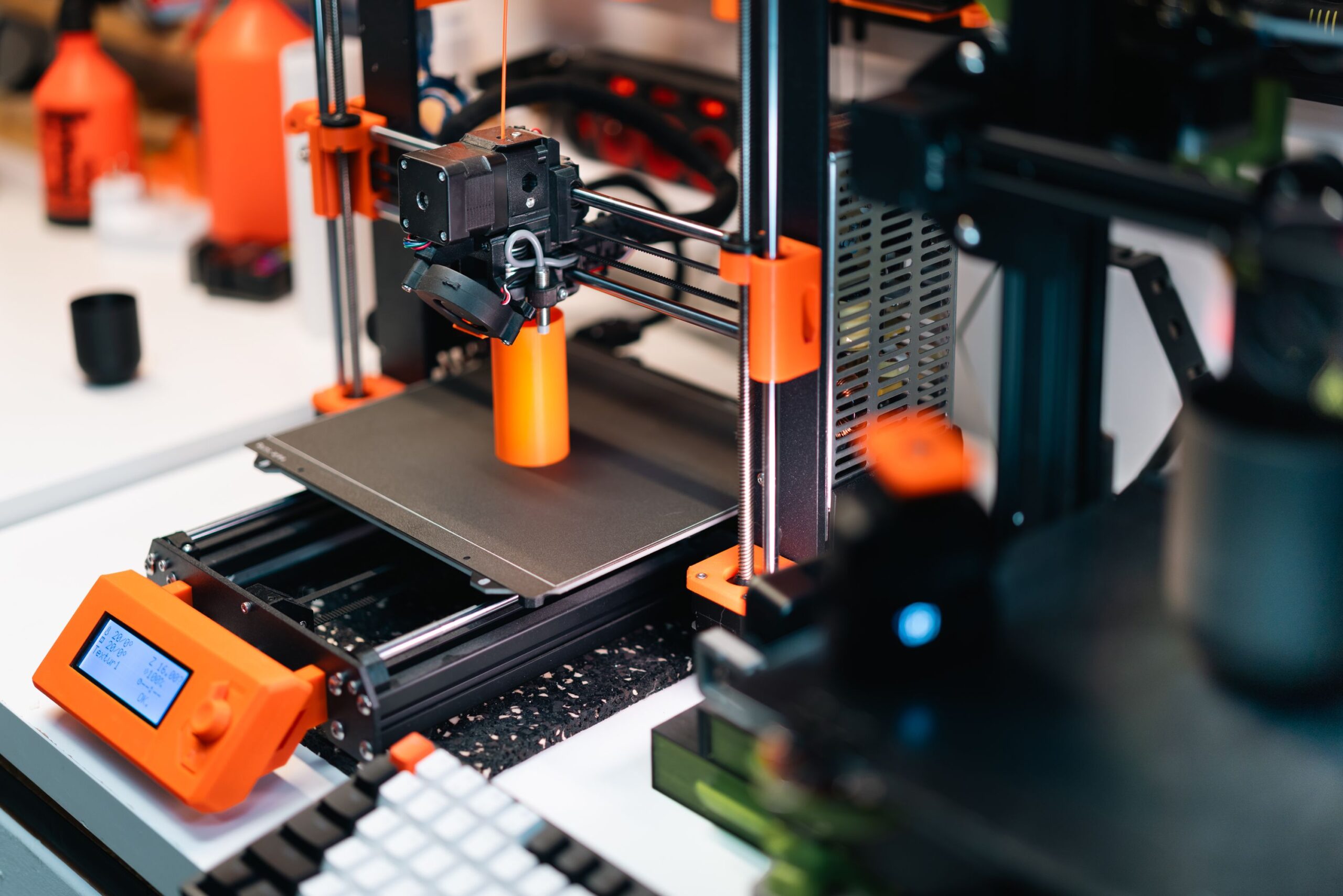
Three-dimensional printing didn’t stay in the factory. It grew into something far more consequential — one of the most genuinely promising technologies for global development we’ve seen in decades. It makes production fast, affordable, and local. And that combination alone rewrites the rules for how humanitarian assistance, healthcare, infrastructure, and education actually get delivered in low-income regions.
The old model? Depend on expensive international supply chains and wait. The new model is different. Communities manufacture what they need, where they need it. That shift cuts transportation costs, slashes waste, compresses production timelines, and — here’s the part people underestimate — hands local entrepreneurs the tools to solve local problems with solutions they actually built themselves.
Governments, nonprofits, universities, and private businesses are all pouring investment into additive manufacturing right now. And the technology keeps reshaping how societies think about poverty reduction, disaster recovery, environmental sustainability, and economic resilience.
What Is 3D Printing?
Most people have heard the term. Fewer understand what it actually means in practice.
3D printing — formally called additive manufacturing — builds physical objects by depositing material layer by layer, guided by a digital design file. Traditional manufacturing usually works the opposite way: cutting, machining, or removing material to reach a final shape. Additive manufacturing only uses what the finished product actually requires. Nothing more.
The range of printable materials is genuinely striking:
- PLA bioplastic
- ABS plastic
- PETG
- Nylon
- Carbon fiber composites
- Stainless steel
- Titanium
- Concrete
- Clay
- Silicone
- Resin
- Recycled plastics
- Biocompatible polymers
That flexibility means the same underlying technology can produce a medical implant or an entire house. Not a metaphor. Literally both.
Why 3D Printing Matters for Global Development
Developing countries face a frustrating cluster of overlapping problems:
- Limited manufacturing capacity
- Expensive imports
- Poor transportation infrastructure
- Medical equipment shortages
- Lack of replacement parts
- High construction costs
- Limited educational resources
3D printing cuts through many of these simultaneously — because it decentralizes manufacturing entirely.
Instead of waiting weeks or months for an imported component to arrive, communities can produce tools, medical devices, educational materials, farming equipment, and replacement parts within hours. That’s not an exaggeration. Hours.
When you think about it, the shift from centralized to localized production doesn’t just solve logistical headaches. It builds fundamentally stronger, more resilient economies from the ground up.
How 3D Printing Supports Humanitarian Aid
Natural disasters don’t just destroy buildings. They destroy the transportation networks that relief workers depend on.
Portable 3D printers change that equation. Humanitarian organizations can now manufacture emergency equipment directly inside disaster zones — no supply convoy required.
What gets printed in the field?
- Water pipe connectors
- Medical clamps
- Surgical instruments
- Temporary shelters
- Replacement drone parts
- Communication equipment components
- Protective face shields
- Medical mask components
- Food preparation tools
Relief organizations don’t need to maintain massive pre-positioned inventories anymore. They produce what they need, when they need it. Storage costs drop. Emergency response speed climbs. That’s a trade-off worth making every single time.
Revolutionizing Healthcare in Underserved Communities
Healthcare might be where additive manufacturing’s impact is most visceral. Most personal.
Affordable Prosthetic Limbs
Traditional prosthetics cost thousands of dollars. Sometimes tens of thousands. For families in low-income regions, that number is simply not real — it’s not achievable.
3D printing changes that. Customized prosthetic limbs can be produced at a fraction of the traditional cost, and the advantages stack up fast:
- Custom fit for the individual
- Lightweight design
- Faster production turnaround
- Easier replacement when needed
- Lower long-term maintenance costs
Children benefit especially. Because as they grow, replacement prosthetics can just be printed again. No waiting lists. No catastrophic expense. Just a new limb.
Medical Equipment Manufacturing
Hospitals in developing regions are constantly short on essential equipment. It’s a structural problem, not an accident. 3D printing lets those hospitals produce what they can’t reliably import:
- Surgical forceps
- Medical trays
- Orthopedic braces
- Splints
- Anatomical teaching models
- Dental devices
- Hearing aid shells
Local production compresses waiting times dramatically. The difference between having a tool and not having one is sometimes the difference between a good outcome and a terrible one.
Customized Patient Care
Modern medicine is moving toward personalization — treatments and devices designed around individual patients rather than averages. 3D printing makes that possible even in resource-constrained settings, producing:
- Patient-specific implants
- Surgical guides
- Dental crowns
- Bone reconstruction models
- Customized orthotics
Surgical accuracy improves. Operating time drops. That’s a real, measurable win.
3D Printed Housing: Affordable Construction Solutions
Housing shortages affect millions of people worldwide. It’s a slow-moving crisis that rarely gets the attention it deserves.
Large-scale concrete printers can construct homes significantly faster than traditional building methods. The advantages aren’t subtle:
- Reduced labor costs
- Lower material waste
- Faster construction timelines
- Improved structural precision
- Greater overall affordability
- Reduced environmental impact
Communities recovering from earthquakes, floods, or conflict don’t have time to wait for conventional construction. Rapid housing deployment isn’t a convenience — it’s survival infrastructure.
Supporting Clean Water Infrastructure
Access to clean drinking water is still a challenge across enormous parts of the world. And honestly, one underappreciated reason water systems fail is that replacement parts aren’t available locally.
3D printing addresses that directly. Water systems get supported through local production of:
- Pipe fittings
- Pump components
- Water filtration housings
- Irrigation connectors
- Valve replacements
- Water testing equipment
Because replacement parts can be printed on-site, systems stay operational with minimal downtime. That’s not a small thing. Consistent water access changes health outcomes, agricultural capacity, and daily life at the same time.
Improving Agricultural Productivity
Agriculture is still the primary income source for millions of families. And farmers face a maddening problem — when machinery breaks, replacement parts can take weeks to arrive. Or longer. That downtime is expensive in ways that compound season after season.
3D printing lets farmers produce what they need locally:
- Irrigation nozzles
- Seed dispensers
- Greenhouse components
- Equipment handles
- Sprayer parts
- Harvesting accessories
Equipment downtime shrinks. Productivity climbs. The math on that is straightforward.
Education Through Hands-On Innovation
Schools everywhere are discovering that 3D printing doesn’t just teach technology — it changes how students engage with every technical subject.
Students stop memorizing concepts. They build them. Then they test them.
Educational applications span a wide range:
- STEM learning projects
- Robotics
- Engineering prototypes
- Geography models
- Mathematical objects
- Biological models
- Chemistry equipment
- Historical artifact replicas
That’s not a supplementary tool. That’s a fundamentally different approach to learning science and engineering.
Empowering Local Entrepreneurship
Here’s something worth sitting with: one of the deepest benefits of additive manufacturing is what it does for economic agency.
Small businesses can now manufacture customized products without investing in expensive factories, molds, or tooling. The barrier to entry collapses. Entrepreneurs produce:
- Household goods
- Mobile phone accessories
- Furniture components
- Jewelry
- Educational toys
- Medical products
- Auto replacement parts
- Agricultural tools
Local employment grows. Dependence on imported goods shrinks. And the economic gains stay inside the community instead of flowing outward.
Reducing Manufacturing Costs
Traditional manufacturing carries a heavy overhead. You need:
- Molds
- Tooling
- Large production facilities
- Warehousing
- Bulk inventory
3D printing eliminates most of that. Manufacturers produce exactly what customers order — nothing more. That reduces overstock, cuts material waste, lowers shipping expenses, and compresses storage costs simultaneously.
Small businesses end up with manufacturing capabilities that previously only large corporations could afford. That’s a structural shift in who gets to make things.
Environmental Sustainability
The environmental case for additive manufacturing is genuinely strong. Not as a marketing talking point — as a mechanical reality.
Reduced Material Waste
Traditional manufacturing removes material. Additive manufacturing adds only what’s necessary. The difference in waste is often significant.
Lower Transportation Emissions
Localized production means products get made near where they’re used. Less international shipping. Smaller carbon footprint per unit.
Recycling Plastic Waste
Many modern printers run on recycled plastic filament made from discarded bottles and packaging. Waste becomes raw material. That’s a circular economy that actually functions rather than one that just sounds good on paper.
Energy Efficiency
For small production runs, many additive manufacturing processes consume less energy than conventional production methods. At scale, that adds up.
Supply Chain Resilience
Recent global disruptions made something obvious that supply chain professionals already knew: international supply chains are fragile. Deeply fragile.
Localized 3D printing reduces that exposure. Communities can produce critical products immediately instead of waiting on distant manufacturers. That resilience matters most during pandemics, natural disasters, political instability, and transportation disruptions — exactly the moments when imported goods stop arriving.
Disaster Recovery Applications
After a disaster, communities need reconstruction capacity fast. Not eventually. Fast.
3D printing assists by producing:
- Building components
- Medical supplies
- Temporary shelters
- Water system parts
- Electrical enclosures
- Sanitation equipment
Rapid local production accelerates recovery timelines while cutting logistical complexity. The fewer moving parts in a relief operation, the faster it actually works.
Industrial Applications That Support Development
Industries are adopting additive manufacturing across sectors — and that broader adoption has a downstream benefit for development contexts. As industrial use scales up, costs fall.
Current industrial applications include:
- Aerospace components
- Automotive prototypes
- Medical devices
- Consumer products
- Construction materials
- Electronics
- Energy equipment
Every year of growing industrial adoption makes the technology more accessible in regions that couldn’t previously afford it.
Challenges Facing Widespread Adoption
Remarkable progress, yes. But the barriers are real and worth naming directly.
Equipment Costs — Industrial printers remain expensive. Desktop systems are getting more affordable every year, but the gap hasn’t fully closed.
Material Availability — Some specialized materials are genuinely hard to source in remote areas. Local recycling initiatives help, but they don’t solve everything yet.
Technical Training — Good equipment in the hands of untrained operators produces poor results. Skilled operators are required, which means sustained investment in vocational education.
Reliable Electricity — Many printing systems need consistent power. Renewable energy integration is a promising path forward, but it’s still a path, not a solved problem.
Future Innovations
Where is additive manufacturing headed? The trajectory is striking:
- AI-assisted design optimization
- Multi-material printing
- Printed electronics
- Bioprinting human tissues
- Large-scale infrastructure printing
- Lunar and Martian construction
- Autonomous manufacturing systems
- Fully recyclable production ecosystems
These aren’t distant science fiction. They’re active research and development categories right now. Their impact across both the humanitarian and commercial sectors will continue to expand.
Global Impact Across Key Sectors
| Sector | Benefits of 3D Printing |
|---|---|
| Healthcare | Prosthetics, implants, surgical tools |
| Education | STEM models, engineering projects |
| Housing | Affordable printed homes |
| Agriculture | Equipment parts, irrigation systems |
| Disaster Relief | Emergency supplies and shelters |
| Manufacturing | Rapid prototyping and local production |
| Water Infrastructure | Pumps, connectors, filtration systems |
| Entrepreneurship | Small-scale manufacturing businesses |
| Environment | Reduced waste and recycling |
| Infrastructure | Faster construction and maintenance |
Why Localized Manufacturing Represents the Future
Localized manufacturing does something profound. It transforms communities from consumers into producers.
Instead of relying on imported products, local innovators gain the ability to design, manufacture, refine, and distribute solutions built around regional needs. That process builds technical skills, creates employment, strengthens supply chains, and increases resilience against both economic and environmental shocks — all at once.
And as equipment keeps getting more affordable while digital design libraries keep expanding, even remote communities will access advanced manufacturing capabilities that were once reserved for large industrial economies. That’s not idealism. It’s a direction the data already supports.
Conclusion
3D printing grew into something bigger than anyone initially expected. It’s not just an innovative production technique anymore — it’s a catalyst for sustainable development, humanitarian innovation, economic empowerment, and environmental responsibility, operating simultaneously.
Affordable local production of medical devices, educational tools, housing components, agricultural equipment, clean water infrastructure, and disaster relief supplies — additive manufacturing addresses genuinely pressing global challenges with speed and flexibility that traditional approaches can’t match.
As investment deepens, education expands, and the technology itself keeps advancing, 3D printing will play an increasingly central role in building resilient communities, reducing poverty, strengthening healthcare systems, backing entrepreneurship, and driving sustainable development worldwide. The ability to manufacture essential products wherever they’re actually needed — that’s not a modest improvement. That’s a transformative shift toward a more inclusive and self-sufficient future.
