
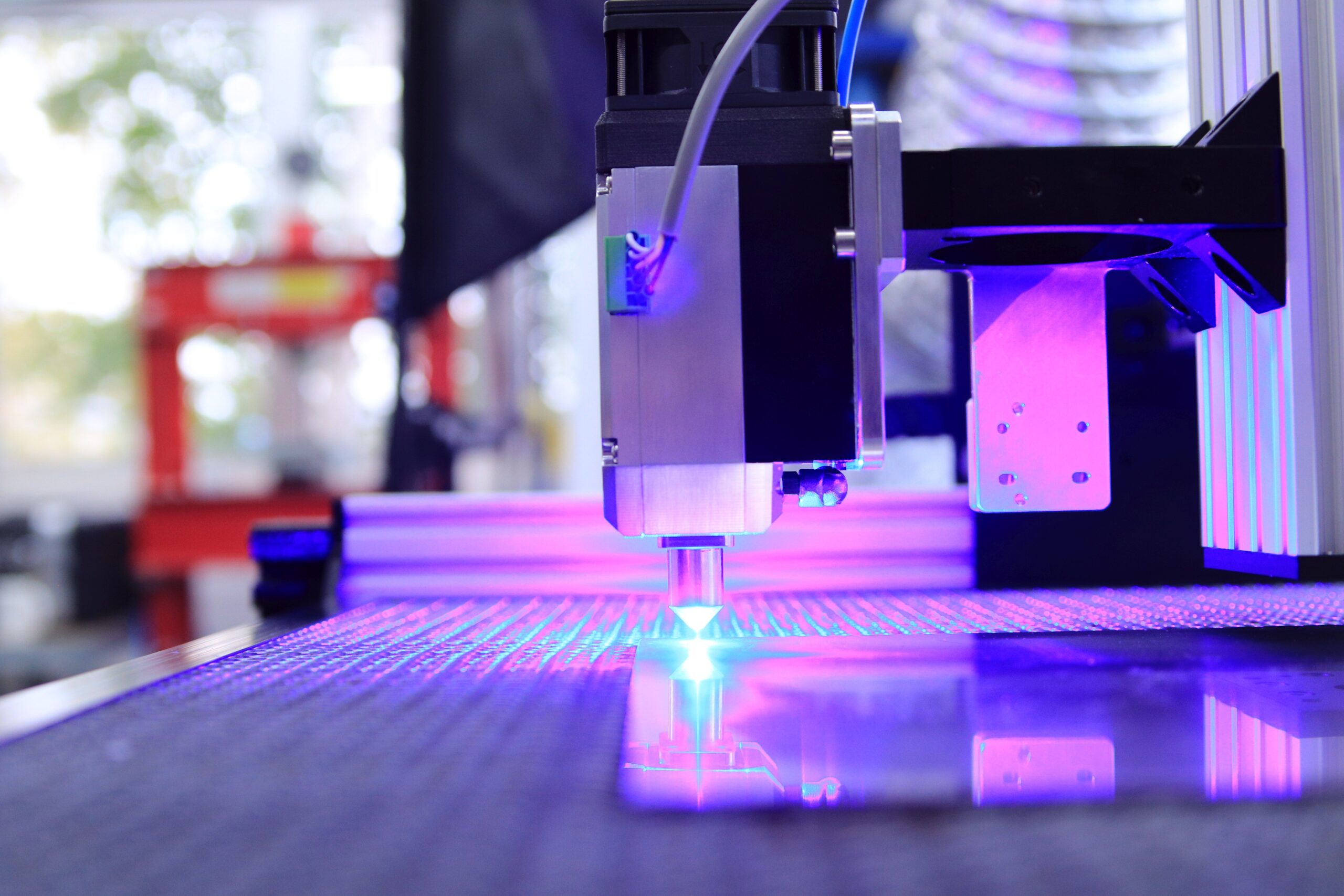
Modern microscopy is changing fast — and not in small ways. Researchers are pushing hard to observe living cells and microscopic structures without physically disturbing them, and some of what’s emerging is genuinely remarkable. Laser-driven contact-free 3D imaging sits at the top of that list. It lets scientists rotate fragile microscopic samples in every spatial direction while keeping their natural structure completely intact.
The impact? Better image quality, sharper measurement accuracy, and doors swinging open across medicine, biotechnology, micro-robotics, and advanced manufacturing. No mechanical hands touching anything. Just laser-generated fluid motion — precise, controlled, extraordinarily gentle.
What Is Contact-Free 3D Microscopic Imaging?
Here’s the core idea. Instead of prodding a specimen with mechanical tools, this technique uses carefully controlled laser energy to produce microscopic fluid flows around the sample. Those flows rotate the object. Slowly. From virtually every angle imaginable.
What that gets you:
- Complete 360-degree visualization
- Reduced physical stress on samples
- Better preservation of biological structures
- Improved image reconstruction
- Higher measurement precision
For living biological samples — the kind that get destroyed almost immediately under conventional handling — this isn’t just useful. It’s a game-changer.
Why Traditional Microscopy Has Important Limitations
Conventional microscopes look at samples from a fixed orientation. That’s the problem right there.
Researchers routinely hit walls like:
- Hidden cellular structures
- Optical shadows
- Limited depth information
- Reduced reconstruction accuracy
- Sample deformation during repositioning
Mechanical rotation systems make it worse. They introduce vibration and physical pressure — both of which can alter fragile specimens before imaging even finishes. For soft biological materials, those limitations aren’t just annoying. They’re fundamental.
The Science Behind Laser-Driven Fluid Rotation
The technique doesn’t push the sample directly. That’s what makes it different.
Instead, the laser gently heats microscopic regions inside the surrounding liquid. Tiny temperature differences form. Those differences produce carefully controlled fluid circulation — and the resulting micro-scale currents rotate suspended particles naturally, without contact.
Compare that to conventional optical tweezers, which trap particles directly. This approach manipulates the environment instead. And that distinction matters enormously when you’re dealing with extremely delicate biological material.
How Helical Opto-Thermoviscous Flow Works
The core innovation here is something called helical opto-thermoviscous flow. The name’s a mouthful, but the process itself is elegant.
It works like this:
- A scanning laser moves through the fluid
- Tiny temperature gradients develop
- Viscosity changes occur inside the liquid
- Spiral fluid motion forms
- Suspended microscopic objects begin rotating naturally
- Cameras continuously capture images during rotation
- Software reconstructs highly accurate three-dimensional models
The object never requires mechanical contact. Not once. Throughout the entire imaging process.
Mermaid Diagram: Laser-Driven Contact-Free 3D Imaging Workflow
Major Advantages of Laser-Based Contact-Free Rotation
1. No Mechanical Contact
Mechanical tools bring stress, vibration, and contamination. Laser-generated flow eliminates all of that. Completely.
2. Complete Three-Dimensional Observation
Every side of a specimen becomes accessible. Hidden regions shrink dramatically, and reconstruction accuracy climbs.
3. Preservation of Delicate Samples
Living cells stay closer to their natural physiological condition throughout observation — which, when you think about it, is the whole point of studying them.
4. Higher Image Resolution
Multiple viewing angles cut down on missing information. Computational reconstruction gets sharper as a result.
5. Better Scientific Measurements
Accurate orientation opens up analysis that simply wasn’t possible before:
- Cellular morphology analysis
- Organelle visualization
- Membrane observation
- Internal structural measurements
Applications in Biomedical Research
This is where the technology really earns its reputation.
Studying living cells means you can’t afford to disrupt them — their behavior is the data. So any method that keeps samples intact while gathering richer information is going to attract serious attention from researchers.
Cancer Research
Tumor cells can be observed from multiple orientations without physical deformation. That improves understanding of cell growth, migration, drug response, and morphological changes in ways that flat, single-angle imaging just can’t match.
Stem Cell Research
Stem cells have extraordinarily delicate membrane structures. Gentle optical manipulation makes long-duration observation possible with minimal disturbance — something that’s been difficult to achieve until now.
Developmental Biology
Embryonic cells don’t sit still. They’re constantly changing shape. Three-dimensional imaging lets researchers analyze those developmental processes with far greater accuracy than before.
Neuroscience
Neural cells branch out in incredibly complex patterns. Viewing neurons from multiple angles improves mapping of those intricate networks in ways that matter for understanding how they actually function.
Benefits for Medical Diagnostics
Better imaging doesn’t just help researchers in the lab. It feeds directly into diagnostic technology.
Potential improvements include:
- Earlier disease detection
- More accurate pathology
- Enhanced digital microscopy
- Better AI-assisted diagnosis
- Improved biomarker analysis
And here’s the thing — higher-quality 3D datasets strengthen machine learning systems too. The models get better data, so their interpretations get sharper. It compounds.
Applications Beyond Medicine
Laser-driven manipulation doesn’t stop at biology. Not even close.
Micro-Robotics
Tiny robotic systems need extremely precise positioning during manufacturing. Contact-free manipulation delivers accurate orientation without mechanical interference — and without the risk of damaging components that cost a fortune to fabricate.
Semiconductor Manufacturing
Microelectronic components grow more complex every year. Optical manipulation provides safer positioning during inspection and fabrication, which matters when a single contamination event can ruin an entire batch.
Nanotechnology
Nanostructures often demand precise alignment. Gentle rotational control keeps contamination and mechanical damage to an absolute minimum.
Materials Science
Microscopic crystal structures can now be investigated from multiple orientations — without introducing physical defects that would compromise the analysis.
Comparison With Traditional Sample Rotation
| Feature | Mechanical Rotation | Laser-Driven Rotation |
|---|---|---|
| Physical Contact | Yes | No |
| Sample Stress | High | Extremely Low |
| Vibration | Present | Minimal |
| Biological Safety | Moderate | Excellent |
| Imaging Precision | Good | Superior |
| Automation | Limited | Highly Automated |
| Orientation Control | Partial | Full 3D |
Integration With Artificial Intelligence
AI systems are only as good as the data they’re trained on. That’s not a controversial claim — it’s just how it works.
Laser-assisted rotation generates richer visual information by collecting images from numerous perspectives. Feed that into an AI system, and you get:
- Improved segmentation
- Better object recognition
- Enhanced cellular classification
- More accurate disease detection
- Higher reconstruction quality
Future AI systems will almost certainly depend heavily on multidirectional microscopy datasets. The field is heading that direction whether researchers plan for it or not.
Future of Contact-Free Microscopy
The trajectory here is steep. Developments on the near horizon include:
- Fully automated laboratory microscopes
- AI-controlled laser positioning
- Real-time 3D cellular tracking
- Continuous imaging of living organisms
- High-throughput pharmaceutical screening
- Integrated robotic microscopy platforms
As optical hardware and computational imaging keep improving, whole laboratories may eventually run autonomous microscopic analysis without human hands in the loop at any point.
Challenges Remaining
Honestly, it’s not all solved. Several real engineering challenges still need work.
Researchers are actively improving:
- Laser efficiency
- Temperature stability
- Flow precision
- Imaging speed
- Computational reconstruction
- Automation software
Future systems will be faster, smaller, and cheaper. That’s the trajectory. But there’s meaningful distance still to travel.
Potential Industrial Impact
Industries positioned to benefit include:
- Pharmaceutical development
- Biotechnology
- Medical imaging
- Tissue engineering
- Semiconductor inspection
- Precision manufacturing
- Optical engineering
- Advanced materials research
The ability to manipulate microscopic objects without any physical contact may fundamentally reshape how laboratory processes get done — across multiple industries simultaneously.
Frequently Asked Questions
Is laser-driven rotation safe for living cells?
Yes. The technique manipulates the surrounding liquid rather than physically touching the sample, which drastically reduces mechanical stress. And because laser energy is carefully controlled throughout, thermal effects stay well within safe limits.
Why is full 3D rotation important?
Viewing a specimen from every angle eliminates hidden regions, improves reconstruction quality, and reveals structures that a single fixed perspective would miss entirely.
Does the laser directly move the cell?
No — and that’s the point. The laser creates tiny temperature-driven fluid flows that gently rotate the sample. No direct mechanical contact happens at any stage.
Which research fields benefit most?
Cell biology, cancer research, neuroscience, stem cell science, nanotechnology, materials engineering, micro-robotics, and precision manufacturing all stand to gain substantially.
Can this technology improve medical diagnostics?
Yes. More accurate three-dimensional imaging supports better digital pathology, sharper AI-assisted diagnosis, and earlier detection of structural abnormalities that would otherwise go unnoticed.
Conclusion
Laser-driven contact-free 3D imaging is one of the most significant advances in modern microscopy — and that’s not an overstatement. By generating controlled microscopic fluid flows instead of relying on mechanical manipulation, researchers can rotate delicate samples naturally. The result is a highly detailed three-dimensional reconstruction with biological integrity fully preserved.
This isn’t just a better imaging tool. It accelerates progress across medicine, biotechnology, nanotechnology, micro-robotics, semiconductor inspection, and advanced manufacturing all at once. As computational imaging and optical engineering keep advancing, contact-free laser manipulation looks set to become a foundational technology for the next generation of scientific discovery and precision engineering.
